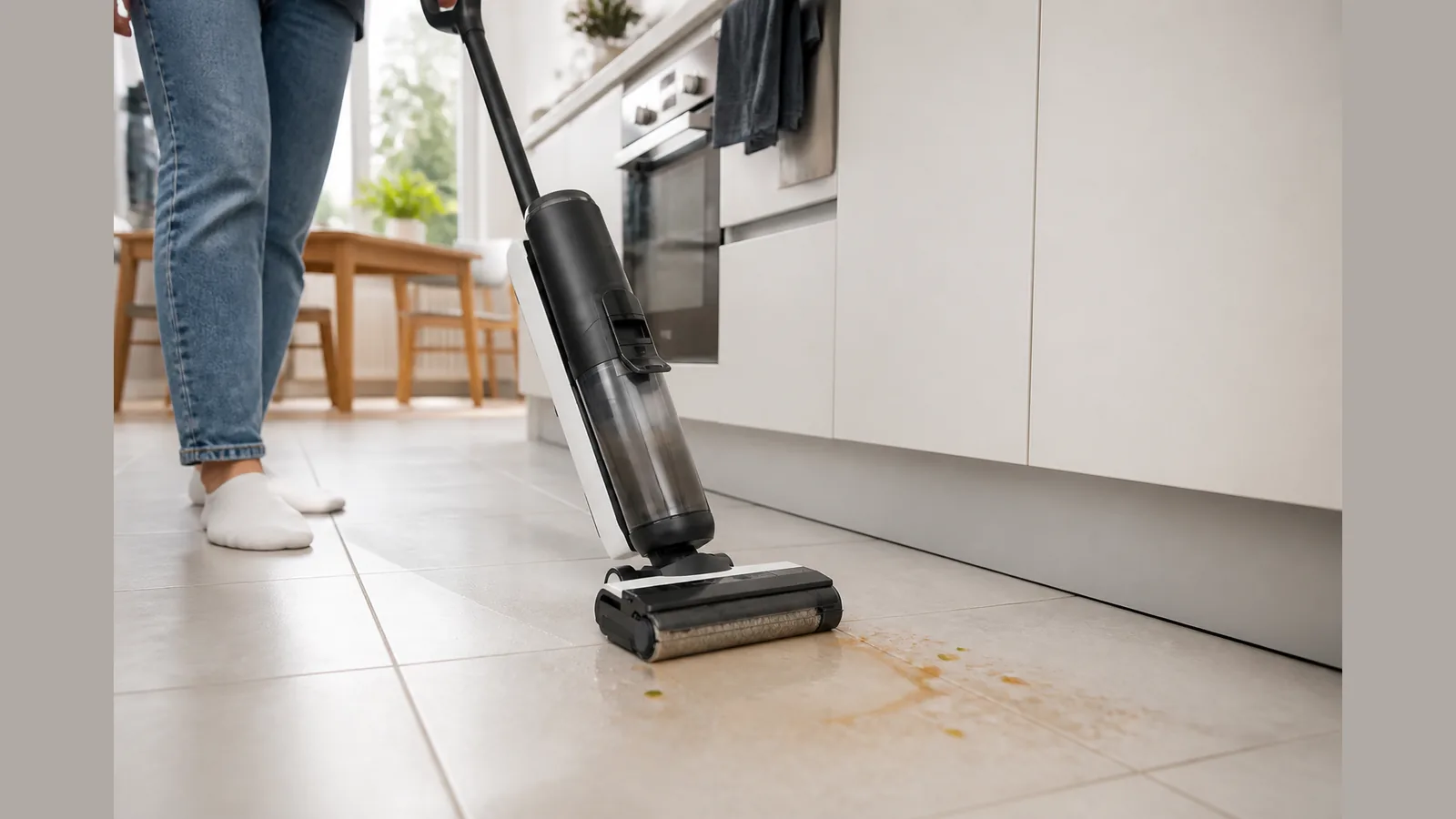
Vacuum Mop for Tiled Kitchen Floors UK: What Actually Matters
A vacuum mop for tiled kitchen floors UK buyers typically need is a wet-dry hard-floor cleaner used on sealed ceramic or porcelain kitchen tiles—the sort of sealed hard floor that wet-cleaning guides and vacuum-mop makers treat as a common use case, not unsealed stone or flood-damaged surfaces.
Direct answer: sealed ceramic/porcelain kitchen tiles are a common wet-cleaning use case
If your kitchen tiles are sealed ceramic or porcelain, a wet-dry vacuum mop sits in the same category as other hard floor cleaners aimed at sealed tiled, wooden or vinyl floors. Authoritative UK guidance on wet hard-floor cleaning lists tile and ceramic among suitable surfaces, while vacuum-mop makers position these tools for sealed hard floors such as stone-class finishes used indoors.
What matters most is seal status and manufacturer flooring guidance—not brand hype. Many wet-dry models are intended for sealed surfaces only; treat that limit as non-negotiable before you wet-clean a tiled kitchen.
Mess map: crumbs, drink spills, cooking film — daily vs weekly passes
Kitchen tile mess tends to fall into three practical buckets:
- Crumbs and dry debris — frequent light passes after cooking or snacking keep grit from grinding into the tile surface.
- Drink spills — spot treatment as they happen, then a short wet-dry pass so liquid does not sit in grout lines.
- Cooking film and splash residue — oil mist and sauce splatter often need a fuller weekly wash rather than a daily skim.
A sensible UK kitchen rhythm is a brief daily tidy for crumbs and small spills, plus a planned weekly wash for cooking film. After wet cleans, empty dirty and clean tanks and clear debris as recommended for domestic wet-dry units; these machines are not for floodwater or plaster dust.
Grout and textured tile caveats without inventing cleaning efficacy
Grout lines and textured or relief tiles change how any floor washer behaves: residue and liquid can sit lower than the tile face, and brush contact may vary across the pattern. That does not mean a vacuum mop “disinfects” grout, removes a set percentage of bacteria, or guarantees a streak-free finish—those claims should not be assumed.
Stay grout-aware in a practical sense: work slowly along joints, avoid flooding the floor, and follow any flooring or grout-care advice from your tile or adhesive manufacturer. If a surface is heavily textured, check the cleaner maker’s sealed-floor guidance before first use rather than inventing performance expectations.
Checklist before first use: sealed floors only; follow manufacturer flooring guidance
- Confirm the kitchen tiles (and any stone-look inserts) are sealed hard floors suitable for wet cleaning.
- Read the vacuum mop manufacturer’s flooring list and your flooring supplier’s care notes; do not extend use to unsealed stone without confirmation.
- Clear large debris first so the wet path is not dragging grit.
- Use fresh water in the clean tank as the machine’s twin-tank design expects, and plan a post-use system clean or self-clean cycle where the model offers one.
- Empty tanks and remove collected debris after the session.
Hard floor cleaners and wet-dry units are widely described for sealed wooden, tiled or vinyl floors; self-cleaning programmes are a common ownership feature, not a substitute for checking seal status.
Next step to same-site S5 page for sealed hard floors
If you are comparing a cordless wet-dry vacuum mop for sealed kitchen tiles, review the current FLOOR ONE S5 product details on this site for the on-page positioning—dual tanks, self-clean dock context, and sealed hard-floor use—then match that wording to your own tile seal and care guidance before you buy.
FAQ
Are ceramic kitchen tiles a normal wet-cleaning surface?
Yes—UK wet hard-floor guidance commonly lists tile and ceramic among suitable surfaces when the floor is appropriate for domestic wet cleaning. Always confirm your specific tiles are sealed and compatible with your machine’s instructions.
Can I use a vacuum mop on every tiled kitchen?
No. Many wet-dry hard floor cleaners are for sealed surfaces only. Unsealed or damaged floors need manufacturer confirmation before any wet method.
What about grout—will a vacuum mop sanitise it?
Do not assume disinfection, bacteria-kill percentages, or streak-free results. Treat grout as a geometry and care caveat: avoid over-wetting and follow flooring guidance.
How often should I wash versus skim?
Daily light passes suit crumbs and small spills; a fuller weekly wash better suits cooking film. Empty tanks and clear debris after wet cleans.
Where can I see a sealed-hard-floor wet-dry example on this site?
See the Tineco FLOOR ONE S5 sealed hard floor product page for the live same-site description of a cordless wet-dry vacuum mop aimed at sealed hard floors.