Hard Floor Cleaner for Cooking Oil Spills UK: A Calm Step-by-Step
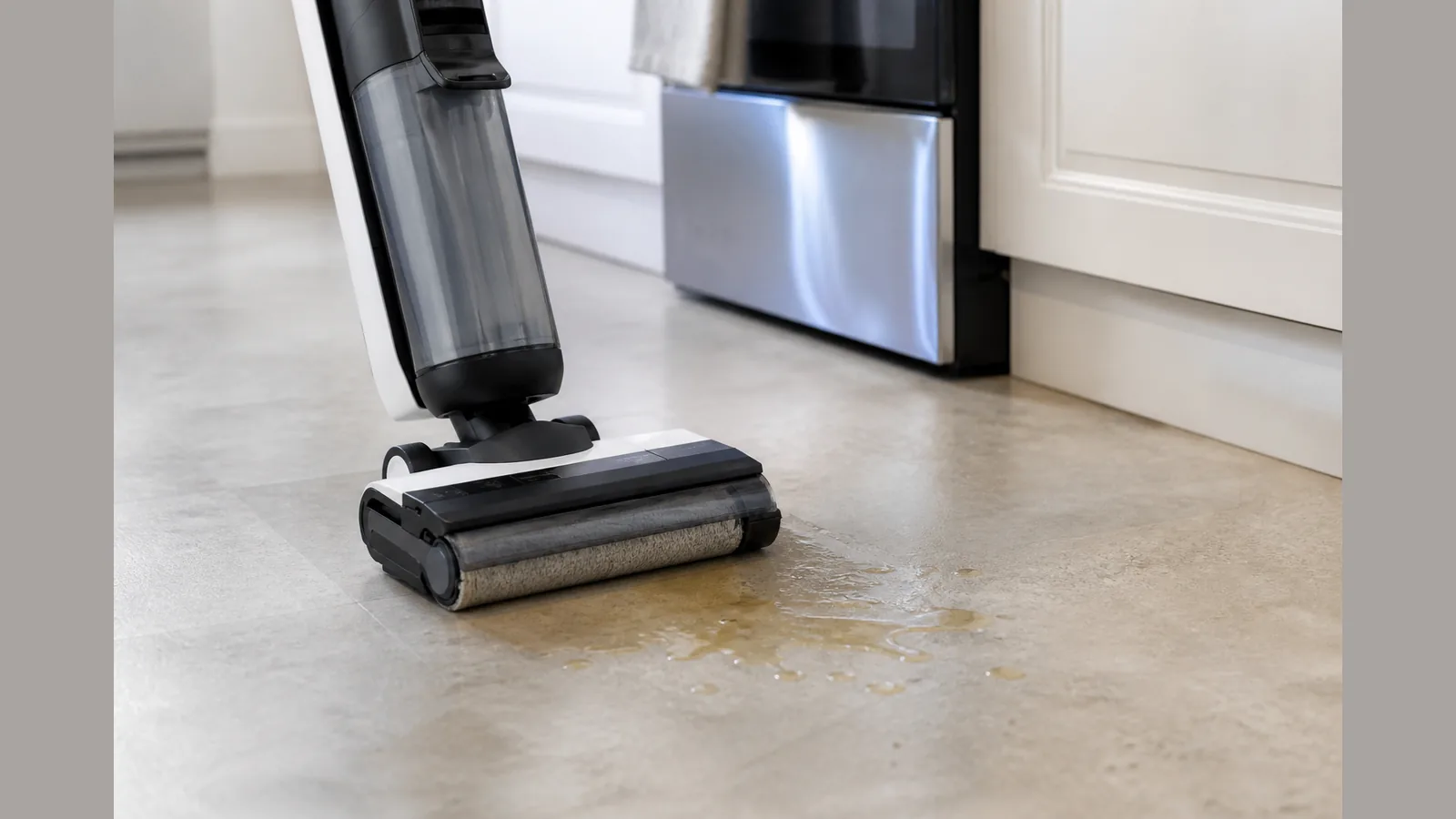
For a hard floor cleaner for cooking oil spills uk households usually face beside the hob, blot or lift excess oil first, then clean with a wet cleaner designed for sealed hard floors rather than relying on a dry-only vacuum that can smear grease.
Direct answer: blot excess oil first, then use a sealed-hard-floor wet cleaner rather than a dry-only vacuum
Cooking oil on tile, sealed wood, vinyl or similar sealed surfaces needs a calm, staged approach. Remove what you can with absorbent paper or a cloth so the patch is no longer swimming in liquid. After that, a wet hard-floor cleaner—often described as a wet-dry unit or vacuum mop—can lift residual stickiness with suction and washing together, which is how UK floorcare guides typically frame these appliances for sealed floors.
Editorial guides describe vacuum mops as combined suction and wet cleaning for hard floors, often with twin tanks, and note that most models are hard-floor focused rather than carpet replacements. Guides to wet hard-floor cleaning also list suitable surfaces such as tile, stone, sealed wood, ceramic, vinyl, linoleum and laminate, and mention heavier kitchen spillages such as oil mist among everyday wet-cleaner use cases.
Safety/boundary: no floodwater; follow floor sealant guidance; no invented chemical recipes
Stay within domestic spill cleaning. Domestic wet-dry units are not for floodwater or plaster dust, and many hard floor cleaners are intended for sealed surfaces only—so check whether your floor finish is sealed before you wet-clean.
- Do not treat large flood volumes or building debris with a household wet-dry cleaner.
- Follow the floor manufacturer’s sealant and care guidance; if the surface is unsealed or uncertain, pause and seek suitable advice rather than wetting it.
- Avoid improvised solvents or chemical recipes; use only plain blotting and products or solutions the cleaner maker approves.
Step sequence for sticky hob-adjacent patches
- Protect the area: keep people and pets clear until the floor is no longer slippery.
- Blot excess oil with absorbent paper or a cloth—press, do not scrub grease deeper into grout or grain.
- Confirm the floor type is a sealed hard surface your cleaner is meant for (for example sealed wood, tile or vinyl as described in hard-floor cleaner guides).
- Run a sealed-hard-floor wet cleaner or vacuum mop over the patch so suction and washing work together on residual stickiness.
- Work along edges and skirting where oil often creeps; some wet-dry designs highlight edge-oriented brush-head cleaning for sealed hard floors on their product pages.
- Empty dirty and clean tanks and clear debris after the clean, as wet hard-floor care guides commonly recommend after use.
When to stop and use manufacturer-approved solution only
Stop and switch approach if oil has soaked into an unsealed or damaged finish, if the spill is larger than a normal kitchen splash, or if the residue will not improve after blotting and a normal wet-clean pass. At that point use only a manufacturer-approved cleaning solution for your machine and floor type—use confirmed details mixes, food-safe claims or solvent shortcuts.
Hard floor cleaner testing and buying guides position these machines for sealed hard floors and common household stains; they do not replace specialist restoration when a finish is compromised.
Next step for sealed hard-floor wet-dry cleaning
If you want a cordless wet-dry vacuum mop positioned for sealed hard floors—with dual tanks and self-clean dock convenience as described on the live product page—see the current Tineco FLOOR ONE S5 product details for on-page features and suitability notes before you buy.
FAQ
Can a dry-only vacuum fix cooking oil on hard floors?
Usually not well. Excess oil should be blotted first; residual grease is better handled with a wet cleaner intended for sealed hard floors rather than dry suction alone.
Are vacuum mops meant for greasy kitchen patches?
UK editorial guides define vacuum mops as combined suction and wet cleaning for hard floors, with twin tanks and self-clean convenience as common ownership features. They are generally hard-floor focused, not carpet replacements, and suit sealed surfaces when used as directed.
What should I do after cleaning sticky kitchen oil?
Empty dirty and clean tanks and remove debris after wet cleans, following the same aftercare habit recommended in wet hard-floor cleaning guidance.
Where can I check a sealed hard-floor wet-dry option?
Review the FLOOR ONE S5 product page for cordless wet-dry positioning on sealed hard floors, dual tanks and self-clean dock details as published on-site.