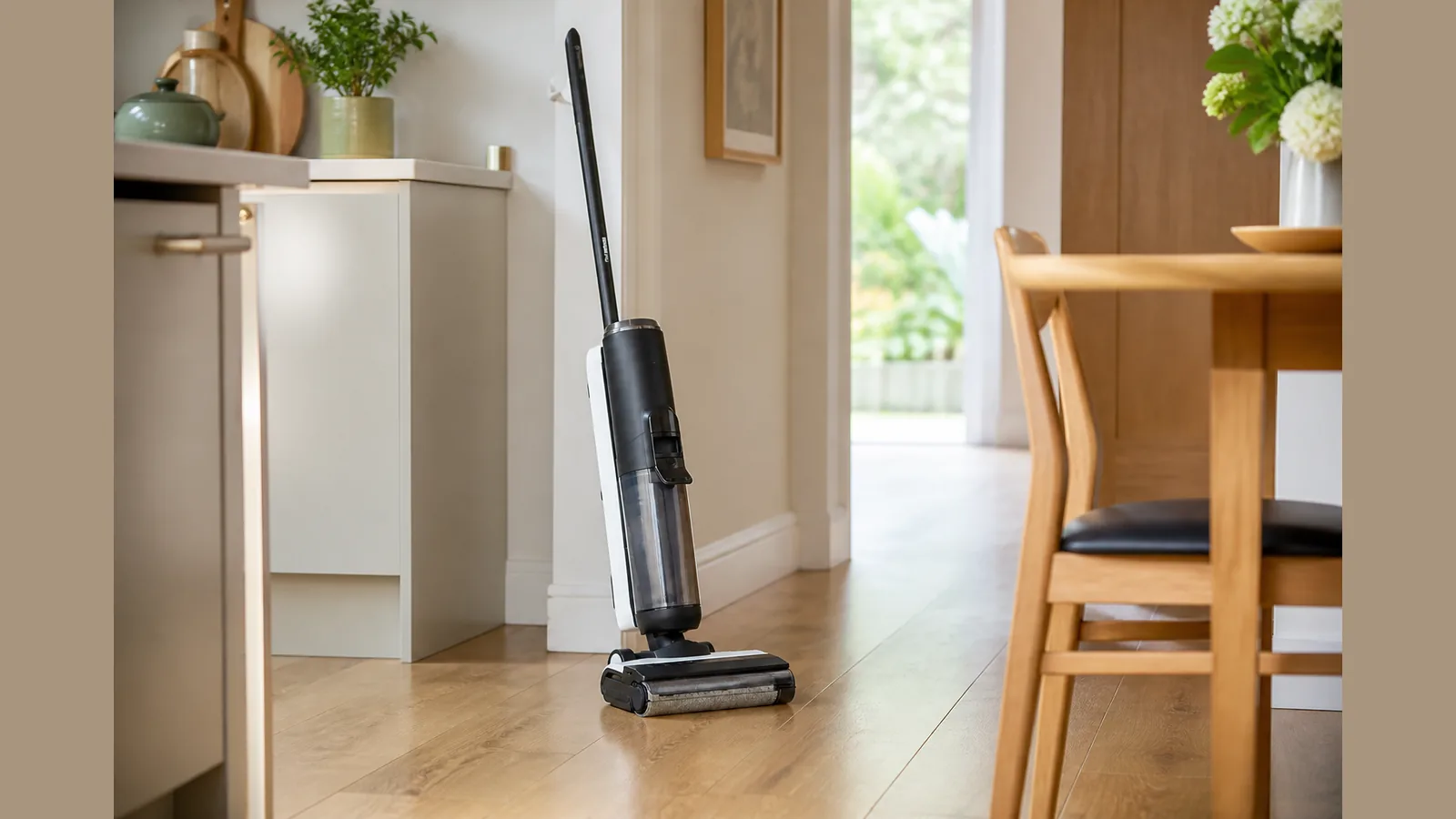
Best Vacuum Mop UK: A Practical Hard-Floor Buyer Checklist
The best vacuum mop UK shoppers should consider is a cordless wet-dry hard-floor cleaner with twin tanks and a self-clean dock, suited to homes where most everyday mess sits on sealed wood, tile or vinyl rather than carpet.
Direct answer: who a vacuum mop suits in UK homes with mostly sealed hard floors
A vacuum mop suits UK homes where sealed hard floors dominate and you want one pass for dry debris and light wet mess. UK editorial guides describe these machines as combined suction and wet cleaning for hard floors, often with twin tanks and self-clean convenience, and note that most models are hard-floor focused rather than carpet replacements. If your day-to-day cleaning is crumbs, dust and spills on sealed surfaces, this category is worth a shortlist; if you still rely on carpeted rooms or stairs, keep a separate dry vacuum in the mix.
Decision path: floor types, mess mix, stairs/carpets still need a separate vacuum
Start with floor type. Hard floor cleaners and wet-dry units are framed for sealed wooden, tiled or vinyl floors, and many models are for sealed surfaces only. Unsealed timber, delicate finishes or soft flooring sit outside that brief.
Next, weigh your mess mix. Vacuum mops are built to handle wet and dry debris together with separate clean and dirty water tanks, which differs from a standard dry vacuum. Sticky kitchen spills and dusty hallways on hard floors fit that pattern; deep carpet soil and stair runs do not.
Finally, plan coverage. Stairs and carpets still need a separate vacuum. Treat the vacuum mop as your hard-floor workhorse, not a whole-home carpet machine.
Checklist table: twin tanks, self-clean dock, sealed-floor confirmation, storage
Use this buyer checklist before you compare models:
| Check | Why it matters |
|---|---|
| Twin tanks (clean and dirty water) | Editorial guides highlight separate tanks so dirty water is not reused on the floor. |
| Self-clean dock or programme | Self-cleaning is a common ownership feature that reduces post-clean rinsing hassle. |
| Sealed-floor confirmation | Many hard floor cleaners are for sealed surfaces only; confirm your floors match that guidance. |
| Storage space for dock and unit | Dock-based setups need a clear wall or cupboard spot so charging and self-clean stay convenient. |
When a simpler mop or spray mop is enough
A simpler mop or spray mop can be enough if your hard floors are mostly dry dust, you already vacuum thoroughly, and wet cleaning is occasional. If you dislike emptying dual tanks or storing a dock, a lightweight spray mop may fit better. Choose a vacuum mop when wet and dry mess arrive together and you want suction plus mopping in one hard-floor pass.
Next step to the live FLOOR ONE S5 page
If your home is mostly sealed hard floors and the checklist above matches how you clean, review the live FLOOR ONE S5 product details. That page presents the FLOOR ONE S5 as a cordless wet-dry vacuum mop for sealed hard floors, with dual tanks and dock self-clean framing as published on-site. Compare those on-page points with your floor types and storage space before you decide.
FAQ on vacuum mop vs wet dry wording
Is a vacuum mop the same as a wet-dry hard floor cleaner?
In UK buyer language, vacuum mop and hard floor cleaner / wet-dry unit often describe the same job: suction plus wet cleaning on sealed hard floors, with separate clean and dirty water tanks. Wording varies by retailer and review site, but the category focus is hard floors rather than carpet replacement.
Do I still need a dry vacuum?
Yes, if you have stairs, rugs or carpeted rooms. Most vacuum mops are hard-floor focused, so a separate dry vacuum remains the practical tool for soft flooring.
What should I confirm before buying?
Confirm sealed-floor suitability, twin tanks, self-clean convenience and somewhere sensible to store a docked unit. Those checks matter more than chasing unverified performance claims.