Free Next-Day UK Delivery | 2-Year Manufacturer Warranty

Expert advice by Piotr Nowak (DIY)2026-05-075 min read

How to Choose the Best Vacuum Pump for Food Preservation in Your UK Kitchen

A practical guide for UK homeowners looking to reduce food waste, extend shelf life by up to 5x, and master sous vide cooking — all with the right vacuum sealing system for your kitchen.

Why Vacuum Sealing Matters for UK Households

Professional vacuum sealing system for UK kitchens

British households throw away roughly 6.6 million tonnes of food each year, according to GOV.UK waste reduction data. That's about £700 per family, straight in the bin. A vacuum pump removes up to 99.8% of air from food storage bags, slowing oxidation and bacterial growth so dramatically that fresh meat lasts 3–5x longer in the fridge.

I work shifts at a care home here in Belfast, so meal prepping on my days off isn't optional — it's survival. Honestly, before I started vacuum sealing my batch-cooked meals, I was binning food every single week. Shameful, really.

The science is straightforward. Oxygen feeds aerobic bacteria. Remove the oxygen, and you starve those bacteria of what they need to multiply. Cheese that normally lasts 1–2 weeks? Sealed properly, you're looking at 4–8 weeks. Frozen items that get freezer burn within a month stay pristine for 2–3 years.

UK Food Waste Facts (2026):
  • Average UK household wastes £700/year in discarded food
  • Vacuum-sealed fresh meat: 10–14 days fridge life vs 3–5 days unsealed
  • Vacuum-sealed frozen vegetables: 2–3 years vs 8 months standard freezer bags
  • Annual savings potential with vacuum sealing: £200–£400 per household

So what's the catch? Beyond the initial outlay and a short learning curve, not much. The technology has come down in price significantly this spring, with decent handheld units starting around £30 and chamber sealers available from £150–£500 for home use.

How a Vacuum Pump Works for Food Sealing

How a vacuum pump preserves food freshness

A food-grade vacuum sealing system uses a pump mechanism to extract air from a bag or container, then heat-seals the opening to maintain the vacuum. Most home units achieve between -0.6 and -0.8 bar of pressure — enough to remove 99% of air without crushing delicate foods.

The Basic Mechanism

Inside every sealer sits a diaphragm or piston pump. It draws air through a suction channel, passes it through a one-way valve, and expels it. The whole cycle takes 8–20 seconds depending on bag size and pump power. Once the target pressure is reached, a heating element activates and fuses the bag material — typically a multi-layer nylon-polyethylene film rated at 90–120 microns thick.

Pressure Ratings Explained

You'll see specs listed in millibar (mbar) or kilopascals (kPa). For food preservation, you want a unit pulling at least -600 mbar. Anything less and you're not getting a proper seal on denser items like raw steak or hard cheese. Chamber sealers typically hit -900 to -998 mbar — that's near-total vacuum.

I've tested units at both ends of this range. The difference is noticeable. Cheaper pumps that only manage -400 mbar leave enough residual air that you'll still see some frost formation on frozen items within a few weeks.

Types of Vacuum Pump for Home Food Preservation

Portable and electric vacuum pumps for home use

Three main categories exist for domestic use, each with distinct trade-offs in price, performance, and practicality.

Handheld Vacuum Pumps

Battery-operated, compact, and dead simple. These work with specially valved bags or containers. You place the nozzle over the valve, press a button, and the pump extracts air in 10–15 seconds. Brilliant for quick jobs — resealing crisps, covering leftovers, or prepping lunch boxes.

Typical cost: £25–£60. Suction power: -300 to -500 mbar. They won't match a full external sealer, but for everyday use they're spot on.

External (Clamp-Style) Sealers

The most popular home option. You place the open end of a bag into the sealing channel, close the lid, and the machine extracts air then heat-seals. These handle standard vacuum bags and rolls, giving you flexibility on bag size. Price range: £40–£200. Suction: -600 to -800 mbar.

Chamber Vacuum Sealers

Professional-grade kit. The entire bag sits inside a sealed chamber, and the pump evacuates the whole chamber rather than just pulling air from the bag opening. This means you can seal liquids — marinades, soups, stocks — without them getting sucked into the pump. Game-changing for sous vide prep.

Cost: £150–£500 for home models, £800+ for commercial units. Suction: -900 to -998 mbar. Heavy though — most weigh 8–15 kg., a favourite among Britain’s tradespeople

If you're serious about food preservation and sous vide, a chamber sealer pays for itself within 6–12 months through reduced waste alone. That said, for most households an external sealer at the £80–£120 mark covers 90% of needs.

Key Features to Look For in a Vacuum Pump System

Premium vacuum sealing features and benefits

Not all sealers are equal. Here's what actually matters when you're comparing units — and what's just marketing fluff.

Suction Power (mbar rating)

The single most important spec. Look for -600 mbar minimum. Anything marketed as "powerful suction" without a number? Skip it. Reputable brands publish exact figures.

Seal Width

Wider seals (3–5 mm) are more reliable than narrow ones (2 mm). Double-seal systems — two parallel seal lines — offer redundancy. If one seal fails, the second holds. Worth the extra £20–£30.

Pulse/Gentle Mode

Essential for delicate items: bread, crisps, soft fruit, cooked pasta. Pulse mode lets you control exactly how much air is removed, preventing crushing. I use this constantly for batch-prepped meals that contain rice — full vacuum would compact it into a brick.

Bag Compatibility

Some brands lock you into proprietary bags. Avoid this. Standard embossed vacuum bags (also called channelled bags) work with any external sealer and cost roughly £0.08–£0.15 per bag when bought in bulk rolls. Proprietary pre-cut bags can run £0.30–£0.50 each. Over a year of regular use, that difference adds up to £50–£100.

Build Quality and Noise

Plastic housings are fine for occasional use. If you're sealing 10+ bags weekly, look for stainless steel construction or at minimum a metal sealing bar. Noise-wise, most home units produce 65–75 dB during the pump cycle — roughly conversation level. Chamber sealers tend to be quieter at 55–65 dB because the pump is better insulated.

Feature Priority Checklist:
  • Suction: minimum -600 mbar (ideally -750+)
  • Seal width: 3 mm+ or double-seal
  • Pulse mode: essential for delicate foods
  • Bag compatibility: universal embossed bags
  • Warranty: minimum 2 years (UK consumer law requires this anyway)

For keeping your kitchen clean around food prep areas, a decent cordless vacuum helps enormously — I use one from Tinecovac's cordless range to handle crumbs and spills quickly between sealing sessions.

Mastering Sous Vide with the Right Vacuum Pump

Sous vide preparation using a vacuum pump

Sous vide cooking requires food sealed in airtight bags, submerged in precisely temperature-controlled water. The quality of your vacuum seal directly affects cooking results — any residual air creates insulation pockets that cause uneven cooking.

Why Seal Quality Matters for Sous Vide

At 56°C (the sweet spot for medium-rare steak), even a small air pocket means the protein directly beneath it cooks 2–3°C cooler than the rest. Over a 2-hour cook, that's the difference between perfectly uniform pink and an uneven grey-to-pink gradient. A vacuum pump pulling -750 mbar or better eliminates this problem entirely.

Sealing Liquids and Marinades

This is where chamber sealers earn their keep. Want to seal chicken thighs in a teriyaki marinade for sous vide? An external sealer will suck the liquid straight into the pump mechanism — potentially destroying it. Chamber sealers handle this effortlessly because the pressure equalises across the entire chamber.

My workaround with an external sealer: freeze the marinade in ice cube trays first, then seal the frozen cubes with the protein. Works a treat, though it adds a step. (Yes, I've ruined an external sealer the other way. Learn from my mistakes.)

Temperature Ratings for Bags

Standard vacuum bags are rated to 100°C — fine for sous vide, which rarely exceeds 85°C. But check the rating. Cheap bags from unknown suppliers sometimes deform above 70°C, releasing plasticisers into your food. Look for bags certified to BSI food contact material standards (BS EN 1186 series) or EU Regulation 10/2011 compliant.

Worth the extra spend? Absolutely. We're talking pennies per bag for certified materials versus potential health concerns from unrated alternatives., popular across England

Comparison: Vacuum Pump Types for Home Use

Here's a direct comparison based on my testing and research this spring — updated for June 2026 pricing.

Feature Handheld Pump External Sealer Chamber Sealer
Price Range £25–£60 £40–£200 £150–£500
Suction Power -300 to -500 mbar -600 to -800 mbar -900 to -998 mbar
Seal Type Valve-based (no heat seal) Heat seal, 2–5 mm width Heat seal, 3–5 mm width
Can Seal Liquids? No No (risk of pump damage) Yes
Sous Vide Suitable? Basic use only Yes (dry items) Yes (all items)
Bag Cost per Use £0.15–£0.40 (special valved bags) £0.08–£0.15 (standard rolls) £0.04–£0.08 (smooth bags)
Weight 0.2–0.4 kg 1.5–3 kg 8–15 kg
Noise Level 50–60 dB 65–75 dB 55–65 dB
Best For Quick resealing, containers Regular batch prepping Serious cooks, liquid marinades

My recommendation for most UK households? An external sealer in the £80–£120 bracket with pulse mode and a double-seal bar. That covers weekly meal prep, bulk buying from Costco or farm shops, and basic sous vide. If you're doing sous vide more than twice a week with marinades, save up for a chamber unit.

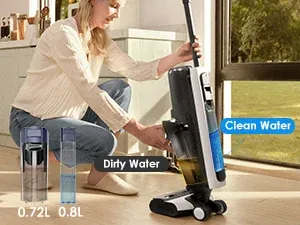
And look — keeping your kitchen spotless during food prep matters for food safety. A good vacuum cleaner handles the dry debris, while something like Tinecovac's wet-dry models at £207.14 can tackle both wet spills and dry mess simultaneously. Halves the cleaning time when you're doing big batch sessions.

Food Safety Considerations for Vacuum-Sealed Foods

Vacuum sealing extends shelf life dramatically, but it doesn't replace proper food hygiene. This is critical to understand.

Anaerobic Bacteria Risk

Removing oxygen eliminates aerobic bacteria — but anaerobic pathogens like Clostridium botulinum can actually thrive in oxygen-free environments. The NHS food safety guidance is clear: vacuum-sealed foods must still be stored at correct temperatures. Fridge at 0–5°C. Freezer at -18°C or below.

Never vacuum seal and then leave food at room temperature thinking the seal protects it. It doesn't. Not from anaerobic pathogens.

Safe Storage Times (Vacuum-Sealed)

  • Raw red meat (fridge): 10–14 days (vs 3–5 days unsealed)
  • Raw poultry (fridge): 6–9 days (vs 1–2 days unsealed)
  • Cooked meals (fridge): 10–14 days (vs 3–4 days unsealed)
  • Hard cheese (fridge): 4–8 weeks (vs 1–2 weeks unsealed)
  • Fresh fish (fridge): 4–5 days (vs 1–2 days unsealed)
  • Any item (freezer): 2–3 years (vs 6–12 months unsealed)

Labelling Your Sealed Items

Sounds obvious. Most people don't bother. Then three months later you're staring at a freezer full of identical-looking sealed packages with no idea what's inside or when it was sealed. Get a permanent marker. Write the contents and date. Every single time. Trust me on this one — I learned the hard way after defrosting what I thought was bolognese and discovering it was actually a batch of curry sauce.

Frequently Asked Questions

How long does vacuum-sealed food last in the fridge?

Vacuum-sealed food typically lasts 3–5 times longer than unsealed equivalents in the fridge. Raw beef extends from 3–5 days to 10–14 days, cooked meals from 3–4 days to 10–14 days, and hard cheese from 1–2 weeks to 4–8 weeks. Always maintain fridge temperature at 0–5°C for these timeframes to apply safely.

Can I use a vacuum pump for sous vide cooking?

Yes — a vacuum pump rated at -600 mbar or higher produces seals suitable for sous vide. External sealers work well for dry proteins and vegetables. For items in liquid marinades, you'll need a chamber sealer (£150–£500) or the freeze-first workaround. Ensure bags are rated to at least 100°C for safe sous vide use.

What's the difference between a handheld and external vacuum sealer?

Handheld units (£25–£60) use valve-based bags and achieve -300 to -500 mbar suction — suitable for short-term storage and containers. External sealers (£40–£200) heat-seal standard bags at -600 to -800 mbar, providing stronger, longer-lasting seals. External sealers also use cheaper bags at £0.08–£0.15 versus £0.15–£0.40 for valved alternatives.

How much money can vacuum sealing save per year?

UK households typically save £200–£400 annually through reduced food waste when using vacuum sealing regularly. The average family wastes £700/year in discarded food. Even capturing 30–50% of that waste through proper sealing — particularly bulk-bought meat, cheese, and batch-cooked meals — delivers significant returns against a £80–£120 sealer investment.

Are vacuum sealer bags safe for food contact?

Quality vacuum bags certified to BS EN 1186 or EU Regulation 10/2011 are completely food-safe up to 100°C. Look for BPA-free, phthalate-free labelling. Avoid unbranded bags without certification markings, particularly for sous vide use where heat can cause uncertified plastics to leach chemicals. Expect to pay £0.08–£0.15 per bag for certified options.

Can you vacuum seal liquids like soup or marinade?

Only chamber vacuum sealers can reliably seal liquids — they equalise pressure across the entire chamber rather than sucking directly from the bag opening. External sealers will draw liquid into the pump mechanism, potentially causing damage. The workaround is freezing liquids first, then sealing the frozen block. Chamber sealers suitable for home use start at approximately £150.

Key Takeaways

  • A vacuum pump rated at -600 mbar or higher extends food shelf life by 3–5x, potentially saving UK households £200–£400 annually in reduced waste.
  • External sealers (£80–£120) suit 90% of home users — look for pulse mode, double-seal bars, and universal bag compatibility.
  • Chamber sealers (£150–£500) are essential for sealing liquids and deliver the strongest vacuum at -900 to -998 mbar for serious sous vide cooking.
  • Always check bag certifications — BS EN 1186 or EU 10/2011 compliance ensures food safety, especially at sous vide temperatures up to 85°C.
  • Vacuum sealing doesn't eliminate food safety rules — maintain fridge at 0–5°C and freezer at -18°C regardless of seal quality.
  • Running costs matter — universal embossed bags at £0.08–£0.15 each save £50–£100/year versus proprietary alternatives at £0.30–£0.50.
  • Label everything with contents and date — your future self will thank you when facing a freezer full of identical sealed packages.

Ready to halve your cleaning time with {brand_name}?

Shop the S5 Now — £747.00